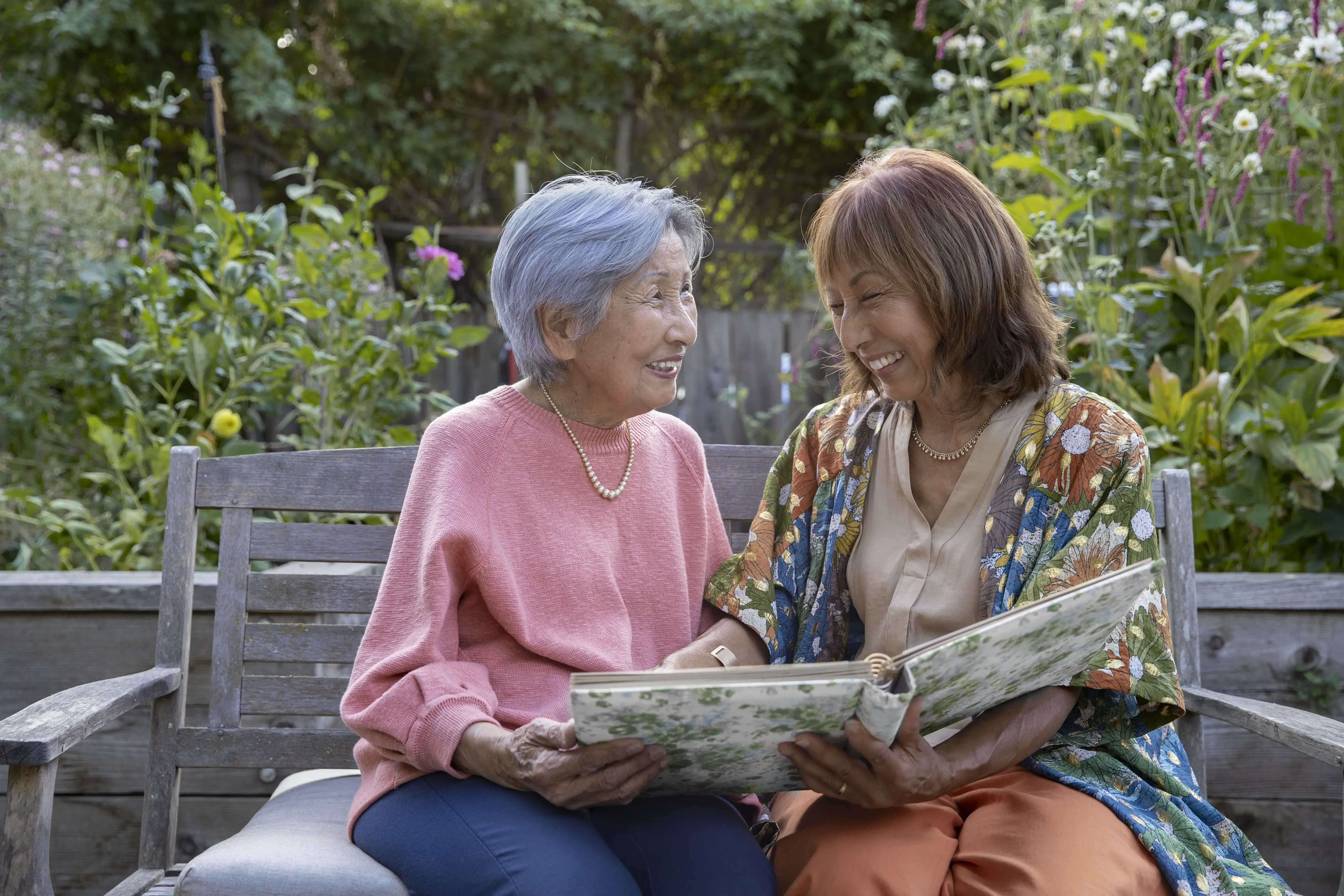
Picture a retired engineer who spent fifty years tending his garden but can no longer manage it alone. Or a grandmother whose arthritis makes preparing family meals increasingly difficult. Traditional care might mean having someone take over these tasks. But what if care instead helped them continue doing what they love, adapting activities to their abilities while preserving the independence and purpose those routines provide?
For many older adults, accepting help feels like surrendering independence. Yet thoughtfully designed care, grounded in the science of healthy aging and behavior change, can do the opposite: help people maintain their abilities, remain engaged in their lives, and reduce avoidable risks.
Beyond what we stand to lose
For generations, we've approached aging largely through the lens of loss: memory, mobility, independence. Yet research offers a more hopeful perspective, showing that how we move, eat, sleep, think, and connect with others can meaningfully influence our health as we age.
The landmark 2025 U.S. POINTER trial found that older adults at risk of cognitive decline benefited from lifestyle interventions combining physical activity, nutrition, cognitive stimulation, and social engagement, with greater cognitive benefits among those receiving structured support.
Perhaps even more encouraging, a 2024 study led by Dr. Dean Ornish, with Alzheimer's researcher Dr. Rudy Tanzi, found preliminary evidence that intensive lifestyle changes may improve cognitive outcomes or slow deterioration in people already diagnosed with mild cognitive impairment or early Alzheimer's disease.
Together, these findings suggest that lifestyle matters not only for reducing risk, but potentially for supporting cognitive health even after symptoms emerge.
The challenge is translating scientific knowledge into what people can realistically do.
Advice to exercise means little without considering someone's mobility limitations or fall risk. Encouraging social connection requires addressing barriers like transportation or hearing loss. And for someone living with dementia, meaningful engagement may depend on another person providing the invitation, encouragement, and structure.
The overlooked piece of the health puzzle
A professional caregiver may spend more time with an older adult in a single day than that person spends with their neurologist in an entire year. While clinicians provide essential expertise and treatment, caregivers are uniquely positioned to help translate recommendations into everyday habits.
At TheKey, this philosophy is central to the Balanced Care Method®, a science-informed approach organized around six pillars: Move More, Nourish & Hydrate, Connect with Others, Engage with Joy & Purpose, Flex Your Mind, and Sleep Well.
Rather than treating these as activities to check off a list, caregivers incorporate them into routines tailored to each person's abilities, interests, and history. Preparing a family recipe can encourage cognitive engagement and connection. A supported walk can help maintain mobility and confidence. Thoughtful adaptations can reduce fall hazards while preserving opportunities for safe movement.
This approach reimagines caregivers as partners in healthy aging, encouraging behaviors that support well-being, recognizing changes early, and helping people continue participating in the lives they value.
As science advances, we have an opportunity to rethink what good care looks like. Some of the most meaningful opportunities to support healthy aging occur not during medical appointments, but in the everyday moments between them.
The future of healthy aging depends not only on what science discovers but also on how successfully we bring those discoveries home.
 (866) 475-4967