At TheKey, we don’t use the phrase “resistant to care.” It puts the problem in the person, as if saying no were a flaw to be overcome. When someone living with dementia hesitates at bath time, we’ve learned that the hesitation is usually about the approach: the timing, the setting, the pace, or a moment that felt frightening or exposing. It rarely means the person is being difficult.
That shift in thinking changes what families and caregivers do next. Instead of asking “How do I get her in the shower?” we ask “What is making this moment hard, and what can we change?”
Why Bathing Is So Demanding
Bathing is one of the most complex things we do each day. A person has to understand why they’re doing it, remember the steps, manage clothing, judge water temperature, keep their balance, and tolerate unfamiliar sensations, all while being very exposed.
Dementia can affect nearly every part of that:
- Memory: they may truly believe they bathed this morning.
- Planning and sequencing: the steps no longer connect.
- Vision and spatial perception: a bathroom with white tiles and a reflective floor can look confusing, even alarming.
- Sensation: running water can sound loud, and water on skin can feel sharp or cold.
- Physical comfort: arthritis, dizziness, fatigue, pain during transfers, or a fear of falling can all make bathing frightening.
Add the fact that bathing is deeply private, and it makes sense that even gentle, well-meant help can feel like an intrusion.
What Hesitation May Be Telling You
Someone living with dementia may not be able to explain what’s wrong. Their reaction is often the clearest message they can send.
| What you notice |
What may be behind it |
What may help |
| Won’t go into the bathroom |
Fear, an unfamiliar-feeling room, or a past bad experience |
Stay calm, keep the routine familiar, and look for what’s uncomfortable |
| Upset when asked to undress |
Embarrassment or vulnerability |
Offer privacy, keep them covered, explain each step |
| Says “I already bathed” |
Memory change, or a wish to avoid the moment |
Don’t argue; try again later |
| Distressed when water turns on |
Sensitivity to noise, pressure, or temperature |
Soften the pressure, adjust temperature, introduce water gradually |
| Pushes your hands away |
Pain, fear, or loss of control |
Stop, give space, explain before touching, and consider whether something hurts |
| Agitated during dressing |
Trouble sequencing, tiredness, uncomfortable clothes |
Simplify choices and go one step at a time |
| Declines help with toileting |
Embarrassment, pain, or not recognizing the need |
Protect privacy, use familiar words, support independence |
A sudden change deserves attention. New fear, agitation, or refusal of care can signal pain, infection, medication effects, delirium, or another medical issue, so mention it to the person’s doctor.
What the Research Tells Us
Families sometimes hear that there’s “nothing to be done” about bath-time distress. In fact, there’s a growing body of evidence about what helps.
A systematic review of assisted bathing for older adults living with dementia found quantitative evidence supporting a person-centred showering approach, towel baths, and the person’s preferred music. Another review of the literature found that most studies of person-centred bathing reduced what is often labeled resistance to care, and its recommendations included protecting privacy, adjusting water temperature, offering simple choices, and asking the person or their family about playing music during personal care.
Music has been tested directly. In one small crossover trial, 18 nursing home residents with dementia and a history of aggressive behavior during care were observed bathing with their favorite music and without it. Other work has described individualized playlists as a practical tool for easing agitation during bathing.
It’s worth being honest about the limits. Much of this research was done in care facilities, with small groups of people, so we can’t promise that any one technique will work for everyone. What the evidence does support is a direction: personalize the experience, protect dignity, and adapt the method to the person, rather than expecting the person to adapt to the routine.
A Shower Done Two Ways
Here’s how the same bath can go very differently depending on the approach.
| Moment |
A standard approach |
TheKey’s approach |
| The invitation |
“It’s time for your shower.” (set by the caregiver’s schedule) |
A warm, simple invitation at a time of day when the person is typically calm and that matches their lifelong habits |
| The setting |
Walk to the bathroom, with the water running as the person enters |
The bathroom is warmed and the towels, robe, and soap are ready before the person arrives. Their favorite music from a meaningful era is already playing softly |
| Undressing |
Undress completely, quickly |
The person stays covered with a towel or robe, with only the area being washed uncovered |
| The water |
Turn the shower on and begin at full pressure |
Introduce water gradually, starting at the hands, and check the temperature together |
| During the wash |
Complete the whole routine, start to finish, with the caregiver doing the work |
One step at a time, with a short explanation before each touch. The person holds the washcloth and does whatever they can |
| If they say no |
Persuade, repeat the request, or push through. Or skip bathing altogether |
Pause, reassure, and step back. Try again later, with a different caregiver, or by a different method such as a seated wash or a warm towel bath |
| The outcome |
Hygiene completed, possibly at the cost of trust |
Hygiene completed and dignity, trust, and comfort intact, so tomorrow is easier |
Neither caregiver in this comparison is trying to do the wrong thing. The difference is whether care is built around the task or around the person.
Seven Ways to Make Bathing Easier
- Start with the person’s lifelong routine. Morning shower or evening bath? A favorite soap or a particular towel? Familiar details can make the experience recognizable.
- Offer small choices. “Would you like to wash your face first, or your hands?” works better than “Do you want to bathe?”
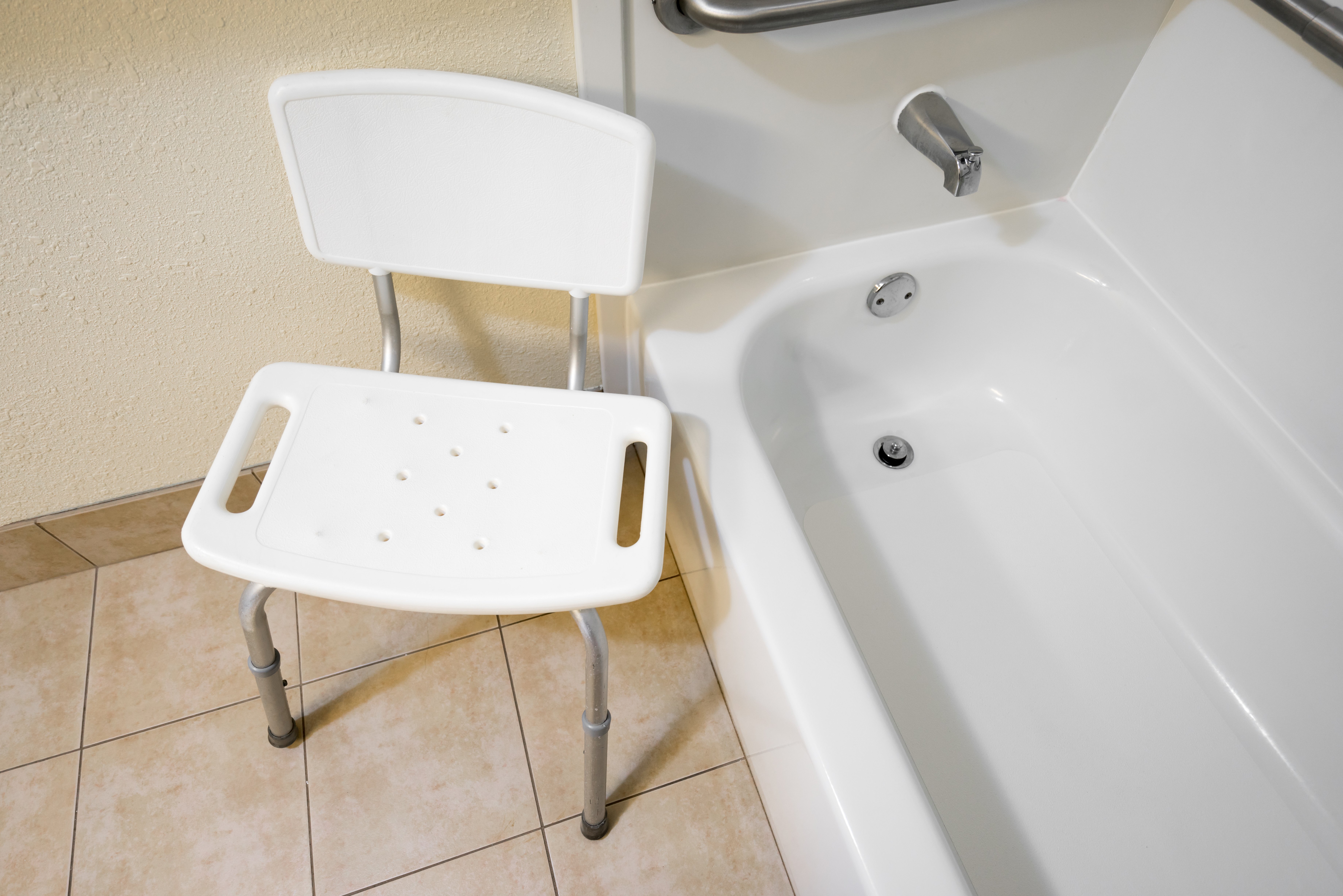
- Set up the environment first. A warm room, good lighting, and everything within reach means the caregiver can stay present. Add safety supports like grab bars, nonslip surfaces, and a shower seat as needed, with professional guidance for installation.
- Explain one step at a time. Use short, calm phrases at eye level, and let the person respond before you touch.
- Protect privacy and modesty. Keep the body covered, and respect any preference about who helps. Never discuss hygiene difficulties in front of others.
- Change the method, not just the message. A seated shower, a partial wash, or a towel bath can be just as clean and far more comfortable than a standard shower.
- Know when to pause. If someone becomes frightened, stop, reassure, and return later. Repeated distress is a sign to rethink the approach, not to push harder.
Before the Next Bath: A Quick Checklist
- Is this the time of day the person is usually most relaxed?
- Is the bathroom warm, well lit, and free of clutter?
- Are towels, soap, and clothes laid out within reach?
- Do I know their favorite music, and is it ready to play?
- Is a seat, grab bar, or nonslip mat in place?
- Have I planned a backup method (partial wash, towel bath) if a shower isn’t working?
- Do I have a calm, simple first sentence ready?
- Am I rested enough to go slowly? If not, can someone else help?
What If Someone Declines a Shower for Days?
Many families worry that skipping a shower means neglect. But bathing frequency isn’t the only measure of cleanliness, and many people stay healthy with a different routine. What matters most is care of the face, hands, mouth, skin folds, and any areas affected by perspiration or incontinence, along with clean clothes and bedding. A partial wash can meet those needs while you keep looking for an approach the person accepts.
The goal isn’t to win an argument about bathing. It’s to find a way that protects health without creating distress. Check in with a healthcare professional if there is skin irritation, wounds, infection, significant discomfort, or if hygiene concerns persist.
Dressing, Grooming, and Toileting
The same principles apply to every personal care routine: preserve choice, simplify tasks, respect preferences, and give only the help that’s needed.
- Dressing: lay clothing out in order, offer two choices, and favor comfortable clothes with easy fasteners. Let the person do the steps they still can.
- Grooming and oral care: familiar products, clear cues, and demonstration help. Untreated dental problems can cause pain and changes in behavior, so ongoing hesitation around mouth care is worth raising with a dentist.
- Toileting: privacy, simple language, and an easy path to the bathroom reduce confusion. If incontinence develops, consider medical conditions, medication effects, mobility, or trouble finding the bathroom. Keep the focus on comfort, skin protection, and respect.
When to Get More Support
Seek professional guidance for repeated falls or near-falls in the bathroom, persistent skin irritation or wounds, untreated dental problems, an inability to maintain essential hygiene, or new or rapidly worsening distress during personal care. An occupational therapist can recommend home modifications and safe techniques, and the person’s healthcare team can look for medical contributors.
Safe technique matters for caregivers, too. Awkward transfers or positioning can injure both people, and if you find yourself physically struggling, it’s a signal to get help, not a failure.
Caring for the Caregiver
Personal care can change family relationships in ways few people expect. A daughter who always relied on her mother’s guidance may now be helping her bathe. A spouse may struggle to move between being a partner and a caregiver when intimate care becomes a source of embarrassment or conflict. Over time, conversations that used to be about shared interests can shrink to reminders and negotiations.
None of this means you’re doing it wrong. Some responsibilities are simply harder when they’re tangled up with a lifetime of history and roles. Letting trained caregivers handle personal care can free families to be what only they can be: a daughter, a husband, a friend.
How TheKey Approaches Personal Care
We treat personal care as far more than a list of tasks. Our caregivers learn each person’s routines, communication style, and what brings comfort or causes distress, then adapt in the moment, using many of the approaches described above.
- TheKeyMatch™ considers compatibility between client and caregiver, because trust and familiarity matter most when help is this personal.
- The Balanced Care Method recognizes that physical well-being is tied to emotional health, meaningful routines, and a sense of purpose.
- Your Client Success Manager coordinates care, keeps your family informed, and helps adjust the plan as needs change.
Professional home care works alongside medical and therapeutic services. When difficulties point to pain, mobility problems, swallowing concerns, or other medical needs, we collaborate with the person’s healthcare team.
Dignity Is Part of the Care
The need for privacy, comfort, respect, and choice doesn’t fade with dementia. A “no” may be fear, not defiance. Agitation may mean pain or sensory discomfort. A hard routine can often become manageable with a change in timing, setting, or method.
Families don’t need to eliminate every difficult moment to give compassionate care. They need an approach that protects health, honors preferences, and preserves trust. A good bath isn’t only one that gets finished. It’s one where the person was treated well throughout.
At TheKey, we believe dignity isn’t an add-on to care. It is the care.
If bathing or personal care has become difficult for someone you love, we’d be glad to help you explore personalized home care that supports comfort, safety, and dignity.
Explore TheKey’s Dementia Care Services
TheKey Home Care can help you understand your options and determine the best plan for your family, your budget, and your loved one's care needs. Give us a call or contact us online—and we'll get back to you within 24 hours.
 (866) 475-4967