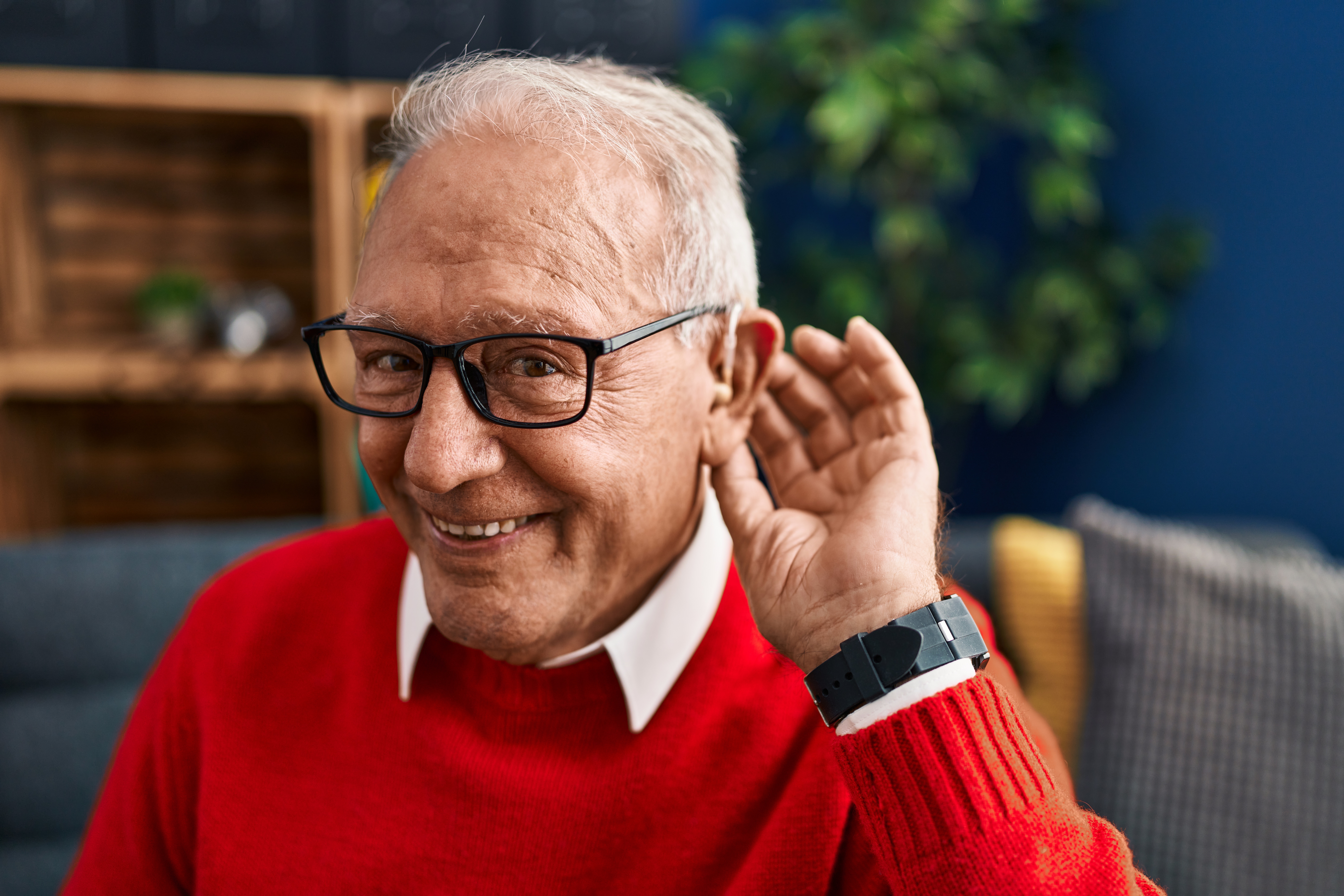
How Common Is Hearing Loss in Seniors?
Hearing loss is one of the most common conditions affecting older adults. According to the National Institute on Deafness and Other Communication Disorders (NIDCD), approximately one in three people in the United States between the ages of 65 and 74 has some degree of hearing loss. Among adults 75 and older, that number climbs to nearly one in two.
Age-related hearing loss — known medically as presbycusis — develops gradually, which is part of why it's so easy to overlook. There's no sudden event. Instead, it tends to creep in over years: a little more difficulty in noisy restaurants, struggling to follow a phone conversation, mishearing words in a way that seems more like confusion than hearing trouble.
That gradual nature is also why so many people go without treatment for years, or even decades. Hearing aids, in particular, are frequently underused — not because they don't work, but because seeking care can feel like acknowledging something people aren't ready to face.
The Connection Between Hearing Loss and Memory
Of all the ways untreated hearing loss affects older adults, its impact on cognitive health is perhaps the most surprising — and the most consequential.
When the auditory system isn't functioning well, the brain has to work significantly harder to fill in the gaps. That extra cognitive load doesn't come for free. Over time, the mental effort required just to follow a conversation can divert resources away from memory, processing speed, and executive function — the very capacities that support independent daily life.
There's also a structural dimension. Research has found that hearing loss is associated with accelerated loss of brain tissue in regions involved in memory and language. And because social withdrawal is a common response to hearing difficulty, older adults with untreated hearing loss often experience reduced mental stimulation — itself a well-established risk factor for cognitive decline.
The result is a compounding effect: hearing loss makes cognition harder, leads to less engagement, and over time may contribute to measurable changes in the brain.
Does Hearing Loss Increase the Risk of Dementia?
Research suggests it does — meaningfully so. Studies from Johns Hopkins University found that older adults with mild hearing loss were nearly twice as likely to develop dementia as those with normal hearing, with moderate hearing loss roughly tripling the risk.
Hearing loss doesn't cause dementia directly. But the Lancet Commission on Dementia Prevention has identified it as one of the leading modifiable risk factors — meaning that treating hearing loss is one of the more actionable steps older adults and families can take to support long-term brain health. That's a meaningful finding, because unlike some dementia risk factors, this one can actually be addressed.
It's worth noting that the relationship can also run in the other direction: cognitive decline can make it harder to follow conversations, which may be mistaken for hearing loss. A thorough evaluation — including both a hearing assessment and a cognitive screening — is the most reliable way to understand what's driving the changes a family is observing.
Hearing Loss and Mental Health: The Mood Connection
Struggling to hear doesn't just affect the mind — it takes a real toll on emotional wellbeing.
Older adults with untreated hearing loss are significantly more likely to experience depression and anxiety than those without hearing difficulty. The reasons are intuitive when you think about them:
- Conversations become exhausting. Following along in group settings requires intense concentration, leaving people drained rather than energized by social interaction.
- Misunderstandings are frustrating — and embarrassing. Mishearing a comment, responding to the wrong thing, or constantly asking people to repeat themselves can chip away at confidence over time.
- Withdrawal becomes the easier option. When engaging feels like work, many people simply stop trying. They skip family gatherings, community events, or their usual clubs — not because they don't want to connect, but because it's become too hard.
One of our clinical staff members described a situation that captures this well: a client used to attend community meetings regularly and loved them. After her husband passed, she stopped going — not entirely because of grief, but because he had always quietly repeated things she'd missed. Without him, she felt frustrated and embarrassed. She wasn't less interested in the world. She just couldn't hear it clearly anymore.
That kind of quiet retreat is common and worth paying attention to. Depression in older adults is often under-recognized, and the connection to hearing loss is still underappreciated.
How Hearing Loss Affects Independence
Independence in later life depends on more than physical ability. It depends on communication — the ability to call a doctor, have a conversation with a pharmacist, navigate a medical appointment, or ask for help when something goes wrong.
When hearing loss goes unaddressed, each of these interactions becomes harder. That difficulty can compound:
- People avoid making calls or asking questions — which can lead to missed information about health or safety.
- Family members may unknowingly start making decisions on behalf of a parent who simply couldn't follow the conversation.
- Fatigue from straining to hear leads to less activity and engagement overall.
Over time, the cumulative effect can look a lot like cognitive decline, when in fact what's happening is a person who's working harder than anyone realizes just to get through a typical day.
It's also worth noting that hearing loss affects safety. Difficulty hearing alarms, doorbells, traffic, or someone calling out a warning puts older adults at measurably greater risk — particularly those living alone.
When Should Families Take Action?
Many families wait longer than they should — often because a parent resists the idea of a hearing evaluation, or because the hearing difficulty is gradual enough that it's easy to adapt around.
Signs that it may be time to have the conversation:
- Your parent frequently asks you to repeat yourself, or responds in a way that suggests they didn't hear the question correctly.
- The television or radio volume has crept up significantly.
- They've become quieter in group settings or started declining social invitations they used to enjoy.
- They seem more irritable, withdrawn, or frustrated than usual — particularly around conversations.
- They express confusion about things that were communicated clearly, or seem to miss information in medical or financial conversations.
A hearing evaluation is typically non-invasive and straightforward. Audiologists can assess the degree and type of hearing loss and recommend appropriate next steps — whether that's hearing aids, communication strategies, or a referral to a specialist.
The NIDCD and Hearing Loss Association of America both offer helpful resources for families navigating next steps, including guidance on hearing aids and financial assistance programs.
What Families Can Do Right Now
Even before a formal hearing evaluation, there are practical ways families can help.
- Face the person directly when speaking. Visual cues — including lip movement and facial expressions — help significantly with comprehension.
- Speak clearly and at a moderate pace, without over-exaggerating your words. Shouting is rarely as helpful as people assume.
- Reduce background noise where possible. Turn off the television when you're having an important conversation.
- Don't assume that nodding means understanding. Check in: "Does that make sense?" or "Can you tell me what you heard?"
- Be patient. Hearing difficulty is frustrating for the person experiencing it, too.
For families who are providing or arranging care, these communication strategies matter. A caregiver who knows how to speak with — rather than past — a person with hearing loss can make a meaningful difference in how connected and respected that person feels.
How Professional Home Care Can Help
For older adults managing hearing loss alongside other health challenges, professional in-home care can be an important layer of support.
TheKey's caregivers are trained to communicate effectively with clients experiencing hearing difficulty. They can also provide consistent support that helps older adults stay engaged, active, and socially connected — all of which contribute to brain health and overall wellbeing.
Beyond companionship, a dedicated caregiver can help with transportation to hearing appointments, medication reminders, and ensuring that important conversations — with doctors, family members, or specialists — aren't missed or misunderstood.
If you're supporting a parent with hearing loss and finding it difficult to manage from a distance, or simply want them to have consistent, attentive support, we're here to help. Reach out to TheKey to learn more about personalized in-home care options in your area.
 (866) 475-4967