(866) 475-4967



What Is Parkinson’s Disease? A Plain-Language Guide for Families
A Parkinson’s diagnosis raises a lot of questions. This guide explains what the disease is, what families can realistically expect, and how in-home support can help a loved one stay safe and independent.
When a parent or loved one is diagnosed with Parkinson’s disease, the first feeling alongside grief is often confusion. What exactly is this disease? What does it mean for their daily life? Will they still be able to live at home?
These are the right questions to be asking. And the good news is that understanding Parkinson’s goes a long way toward knowing how to support someone through it.
This guide explains what Parkinson’s disease is, what to expect as it progresses, and what families can realistically do to help.
What Is Parkinson’s Disease?
Parkinson’s disease is a condition that affects the nervous system — specifically, the part of the brain involved in movement control.Parkinson’s disease develops when dopamine-producing nerve cells, particularly in a movement-related area of the brain called the substantia nigra, gradually become damaged or die. As dopamine signaling declines, movement can become slower, stiffer, and less coordinated.” That’s what causes the shaking, stiffness, and slowness of movement that most people associate with Parkinson’s.
Parkinson’s isn’t a rare condition. According to the Parkinson’s Foundation, about 1.1 million people in the United States are living with the disease, and approximately 90,000 new cases are diagnosed each year. It’s most common in people over 60, though younger-onset cases do occur.
One important thing to understand early on: Parkinson’s isn’t the same for everyone. Two people with the same diagnosis can have very different experiences. Some will have a tremor in one hand. Others may have more stiffness or balance problems. The disease also progresses at its own pace — often slowly, and sometimes unpredictably. This variability is one of the things that makes Parkinson’s both complex and deeply personal.
What Are the Symptoms of Parkinson’s Disease?
Movement Symptoms
The most recognizable signs of Parkinson’s are related to movement. These are sometimes called “motor symptoms” and include:
Tremors. A rhythmic shaking, most often in the hands or fingers, that tends to happen at rest. Not everyone with Parkinson’s has a tremor, but it’s the symptom people most commonly recognize.
Slowness of movement. Also called bradykinesia, this refers to a general slowing down that affects how quickly and smoothly a person can move. Simple tasks — getting dressed, preparing a meal, walking across a room — may take noticeably longer.
Muscle rigidity. Stiffness in the arms, legs, or neck that can limit range of motion and cause discomfort. It can also contribute to a reduced or blank facial expression, which may make someone appear uninterested or emotionally flat when that’s not the case at all.
Balance and coordination problems. As Parkinson’s progresses, maintaining balance becomes harder. This increases the risk of falls, which is one of the most important safety concerns for families to keep in mind.
Freezing. Some people with Parkinson’s experience episodes where their feet seem to “lock” to the ground mid-stride. These brief but startling pauses can happen suddenly and are a significant fall risk.
Non-Movement Symptoms
What surprises many families is how much of Parkinson’s happens beyond movement. Non-motor symptoms are just as real — and in some cases, just as impactful on daily life.
Cognitive changes. Parkinson’s can affect memory, focus, and the ability to plan and organize. Some people develop Parkinson’s-related dementia over time, though this isn’t universal. Even without dementia, some people experience cognitive slowing, reduced attention, or difficulty with planning and organization
Sleep problems. Disrupted sleep, vivid dreams, and difficulty staying asleep at night are very common. Daytime sleepiness often follows.
Speech and swallowing changes. A person’s voice may become softer or harder to understand. Swallowing can become slower and less efficient as the disease progresses, which has real implications for eating and staying hydrated.
Mood and emotional health. Anxiety, depression, and apathy affect a significant portion of people with Parkinson’s — not simply as reactions to the diagnosis, but as part of the neurological process itself.
Bowel and bladder changes. Constipation and urinary urgency are common, often related to the autonomic nervous system changes that Parkinson’s causes.
How Does Parkinson’s Progress?
Parkinson’s is a progressive disease, meaning symptoms tend to change over time. That said, progression varies widely from person to person. Some people live with mild symptoms for many years. Others notice more significant changes more quickly.
Neurologists often use a staging framework to describe where someone is in the progression of the disease, ranging from mild symptoms affecting only one side of the body, to more significant bilateral symptoms, to challenges with balance and daily function. Even in later stages, many
people with Parkinson’s are able to remain at home with the right combination of medical care, safety planning, family support, and professional help.
As Parkinson’s advances, particularly for people taking levodopa over time, some individuals experience ‘on’ and ‘off’ periods tied to medication timing. During “on” periods, the medication is working and movement is easier. During “off” periods — usually as a dose begins to wear off — symptoms can temporarily worsen, tremors can intensify, and a person may become very stiff or appear “frozen.” These fluctuations are common, and learning to recognize them helps families respond calmly and appropriately.
What Causes Parkinson’s Disease?
Researchers have identified several factors that may contribute to Parkinson’s, including genetic variations, environmental exposures, and age-related changes in the brain. In most cases, no single cause can be identified. The National Institute on Aging offers a thorough overview of current research if you’d like to go deeper.
What is well established is that Parkinson’s involves the loss of dopamine-producing neurons in a specific area of the brain, and that this process develops gradually — often over years before symptoms become noticeable. Most people with Parkinson’s don’t have a known family history of the disease.
How Is Parkinson’s Diagnosed?
There’s no blood test or brain scan that definitively diagnoses Parkinson’s. Diagnosis is based primarily on a clinical evaluation — a neurologist reviews a person’s medical history, observes their movement, and looks for the characteristic signs of the disease. Diagnosis is clinical: a neurologist reviews the person’s history, examines movement, and looks for bradykinesia along with features such as rest tremor or rigidity, while also considering other causes of parkinsonism.
This process can take time. It’s not uncommon for a family to notice changes in a parent for months before a diagnosis is confirmed. If you’re in that period of uncertainty, advocating for a referral to a movement disorder specialist — a neurologist with specific expertise in Parkinson’s
— can make a real difference in the accuracy and confidence of the diagnosis. The Mayo Clinic’s overview of Parkinson’s disease is a helpful reference as you prepare for those conversations.
What Does a Parkinson’s Diagnosis Mean for Daily Life?
The honest answer is: it depends, and it changes over time.
In the early stages, many people with Parkinson’s continue doing the things they enjoy — cooking, gardening, socializing, even working — with modest adjustments. With the right medications, the right support, and a proactive approach to daily routines, quality of life can remain high for years.
As the disease progresses, more support tends to become necessary. That support might include medication reminders, help with personal care, safety adjustments at home, and assistance with mobility. Exercise can play an important role. Research consistently shows that regular physical activity can help maintain function and slow the progression of some symptoms.
Families often find that the most useful shift they can make early on is moving from “doing for” to “doing with.” Parkinson’s slows things down, but that doesn’t mean independence disappears.
Allowing extra time, building routines, and offering help without rushing can make a significant difference in how a person feels about their own capabilities.
How Can In-Home Care Help Someone with Parkinson’s?
For many families, professional in-home care becomes part of the picture at some point — not as an admission of failure, but as a way to maintain safety and quality of life.
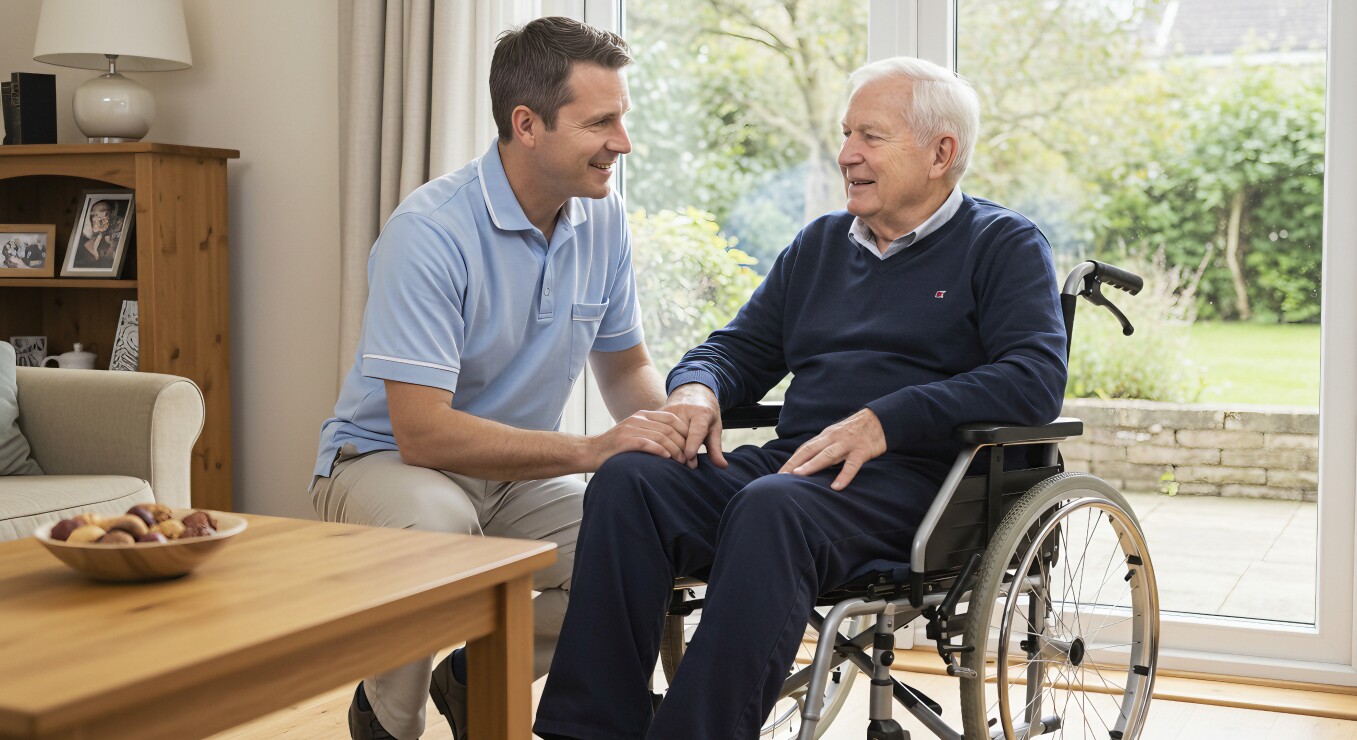
A trained caregiver can support someone with Parkinson’s with daily tasks like dressing, bathing, and meal preparation — while also providing companionship, medication reminders, and encouragement to stay active. Importantly, a skilled caregiver learns the rhythms of the person they’re supporting: when their “on” periods tend to fall, which tasks are hardest, and how to offer help in a way that preserves rather than undermines their sense of independence.
At TheKey, caregivers who support clients with Parkinson’s are trained in the day-to-day realities of the disease — from managing freezing episodes safely to understanding the importance of medication timing. Our approach is built around the whole person, not just a list of tasks, with personalized care plans guided by our Balanced Care Method® and a dedicated Client Success Manager who stays close to the family throughout.
If your loved one has recently been diagnosed with Parkinson's disease, TheKey can help you navigate the next steps. Our caregivers provide personalized home care, medication reminders, mobility assistance, and companionship to help older adults remain safe and independent at home. Caregivers do not replace medical care, physical therapy, occupational therapy, speech therapy, or neurology follow-up, but they can help families carry the care plan into daily life. Contact TheKey to speak with a care advisor.
Frequently Asked Questions
Yes, though it doesn't affect everyone equally. Some people with Parkinson's develop what's known as Parkinson's disease dementia, which can affect memory, reasoning, and the ability to plan and organize. It typically appears in the later stages of the disease. Not everyone with Parkinson's will develop dementia, and the timeline varies considerably from person to person.
If you notice significant cognitive changes in a loved one with Parkinson's, it's worth raising with their neurologist.
There's no single answer — progression varies widely from person to person. Some people live with relatively mild symptoms for a decade or more; others experience more significant changes more quickly. Factors like age at diagnosis, overall health, and access to good care and exercise all play a role. What's consistent is that Parkinson's is a slowly progressive disease, and with the right support, many people maintain a good quality of life for many years after diagnosis.
Parkinson's itself is not typically considered a direct cause of death, but complications associated with the disease — particularly falls, pneumonia from swallowing difficulties, and the physical toll of later-stage symptoms — can be serious. With good medical care and appropriate support, many people with Parkinson's live for many years after diagnosis. Life expectancy varies considerably depending on the individual and how the disease progresses.
Parkinsonism is an umbrella term for symptoms that resemble Parkinson's — tremor, stiffness, slowness of movement — but that have a different underlying cause. Some medications, other neurological conditions, and certain toxins can produce parkinsonism. True Parkinson's disease is the most common form, but a neurologist will typically want to rule out other causes before confirming the diagnosis. This is one reason why an accurate, specialist-led diagnosis matters.
Most people with Parkinson's have no family history of the disease. A small percentage of cases
— roughly 10 to 15 percent — are linked to genetic mutations, but for the majority, no single cause can be identified. If you have a close relative with Parkinson's and are concerned about your own risk, a conversation with a neurologist is the best place to start.
Essential tremor is the most common movement disorder and is often confused with Parkinson's. The key difference is that essential tremor typically occurs during movement — when reaching for something, for example — while the tremor associated with Parkinson's tends to happen at rest. Essential tremor doesn't involve the other motor symptoms of Parkinson's, such as slowness of movement or muscle rigidity. A neurologist can distinguish between the two.
There's currently no treatment that stops Parkinson's from progressing, but there is strong evidence that regular exercise helps people maintain function, mobility, balance, and quality of life for longer, even though no lifestyle intervention has been proven to stop Parkinson’s progression.Research into disease-modifying treatments is active and ongoing.
Many people with Parkinson's live at home for the majority of their illness, often with gradually increasing support. The timeline varies significantly from person to person depending on the rate of progression, overall health, and the quality of care and support in place. Proactive planning — including professional in-home care when the time is right — is one of the most effective ways to extend safe, independent living at home.
There's no single threshold, but common signals include difficulty managing medications reliably, increased fall risk, challenges with daily tasks like dressing or meal preparation, or family caregivers reaching the limits of what they can safely manage. Earlier support tends to produce better outcomes than waiting for a crisis. A care consultation is a useful first step, even if full-time support isn't yet needed.