As we grow older, our minds and bodies undergo many changes. It is normal to be concerned about changes in memory and thinking in yourself or your older loved ones. You may be asking:
- Do I just have to accept memory loss as a normal part of aging?
- Is Alzheimer’s or dementia a normal part of aging?
- What is not a sign of normal aging?
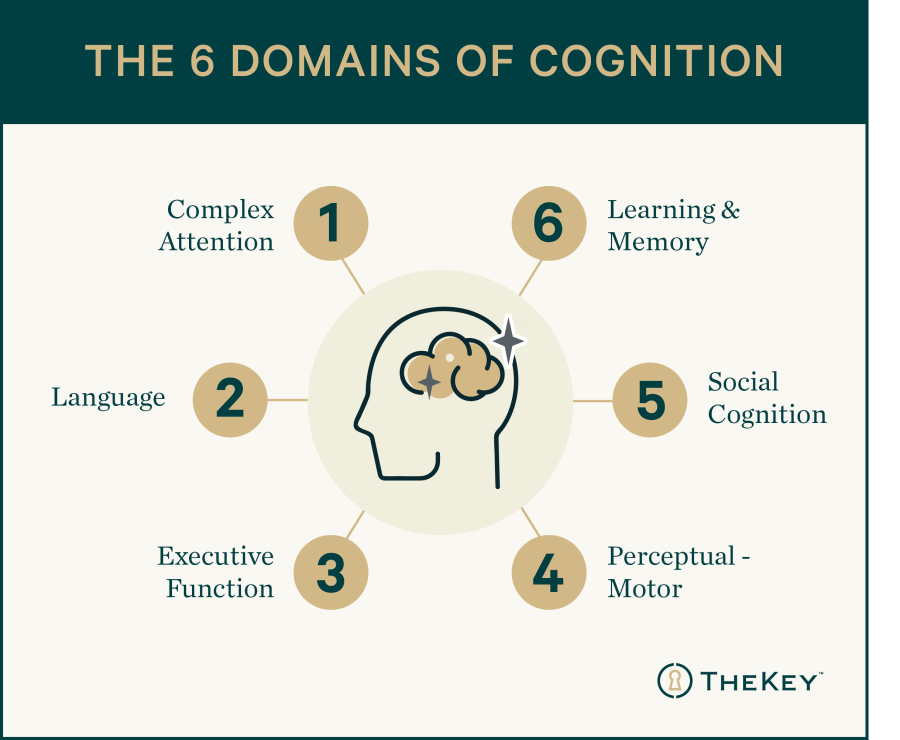
Some cognitive decline is normal in older adults, and memory is not the only function affected. There are six major domains of cognition to consider when assessing normal aging vs possible dementia. If you notice behaviors and changes in yourself or your aging loved ones, understanding these domains can help you better communicate with your doctor and plan for future care if necessary.
The 6 Cognitive Domains: Normal Changes vs Signs of Dementia
The brain has many complex and marvelous functions, including memory, reasoning, and language. Researchers have broken down the brain’s main functions into six cognitive domains and identified normal changes vs potential warning signs of dementia.
1. Complex Attention. This is the ability to stay focused on and complete a task even when there are distractions going on around you.
- Normal: making a mistake in a recipe while talking to another person.
- Potential warning sign: not returning to and finishing a recipe if you get interrupted.
2. Executive Function. This refers to the skills needed to plan, make decisions, respond to what is going on, and then move from one task to another. Executive function in older adults can change. It may take longer to process and respond to new information.
- Normal: needing assistance with using a complicated new device or occasionally missing a bill payment but remembering later and being able to take corrective action.
- Potential warning sign: having trouble completing daily tasks such as getting dressed or brushing your teeth, and frequently missing bills and other important deadlines.
3. Learning and Memory. The brain is skilled at recording information and then being able to retrieve it. However, your brain doesn’t hold memories as crystal clear recordings, so it is not uncommon that some memories may be a little fuzzy.
- Normal: occasionally forgetting where you put your keys or calling someone the wrong name.
- Potential warning sign: regularly having trouble remembering names of people you see frequently or getting lost in familiar places.
4. Language. There are two forms of language: expressive (what we say) and receptive (what we understand). This includes speaking, reading, writing, using the correct names of objects, and using proper grammar.
- Normal: having that “on the tip of my tongue” feeling when trying to think of the proper word. It may take longer to remember and express yourself clearly.
- Potential warning sign: having constant difficulty following a conversation or plot line in a movie or book. Another warning sign could be using alternate words rather than the obvious word, such as calling an elevator the “up down”.
5. Perceptual–Motor. Perceptual-motor skills are the connection between what your eyes see and what your brain understands. For example, looking at a toothbrush and knowing that it is for brushing your teeth.
- Normal: making a mistake and grabbing your hairbrush when you mean to grab a toothbrush.
- Potential warning sign: having great difficulty returning the hairbrush to the proper place and picking up the toothbrush.
6. Social Cognition. Our social cognitive skills can be defined as being able to feel empathy, understand motivation, and recognize and respond to other’s emotions. These skills are foundational to normal human function.
- Normal: making a decision that others disagree with or saying things just a bit too bluntly (especially if this is typical for them).
- Potential warning sign: having angry outbursts or frequent mood swings that aren’t typical for them, or an otherwise outgoing and cheerful person suddenly becoming withdrawn.
Important factors to consider when comparing age-related cognitive changes and potential warning signs of dementia are how often someone exhibits these changes, what their baseline was, and how severely these changes impact their daily life.
What is Mild Cognitive Impairment?
As people age, we expect to see changes in cognitive function, such as slower processing speeds. This is why neuropsychological tests that assess cognitive changes are normed for different ages; we do not expect a 90-year-old to perform in the same way as a 20-year-old on a test of processing speed. Understanding these normal age-related changes helps differentiate between typical aging and potential signs of cognitive impairment.
Sometimes, cognitive changes are more severe than normal cognitive decline, but not severe enough to be diagnosed as dementia. This is known as Mild Cognitive Impairment. A person with Mild Cognitive Impairment may have changes in their behavior and memory that are noticeable to them and their family. One or more of the six cognitive domain warning signs could be present. However, the person can still complete their activities of daily living without significant trouble. These activities include:
- Getting dressed
- Brushing teeth
- Eating
- Moving around the house
They are still able to do the daily activities, but more complicated activities or technologies might be a challenge. Mild Cognitive Impairment can have many outcomes, as someone’s symptoms can improve or never go on to develop dementia, remain the same, or worsen and become dementia. If your loved one is experiencing Mild Cognitive Impairment, it is important to monitor their symptoms for any changes and develop healthy habits that can help ease or prevent symptoms.
What to Do When Cognitive Changes Seem Abnormal
At this point, warning bells may be ringing in your head. You may recognize one or more of these warning signs in yourself or in your loved one. Fortunately, you can take action to have concerning symptoms evaluated, and find options for care and improving cognitive health.
See Your Doctor First
If you are concerned that you or a loved one may be experiencing symptoms of Mild Cognitive Impairment or dementia, set up an appointment with your doctor. Go through the six cognitive domains and make a list of the specific symptoms or changes that you are concerned about.
Here are some specific symptoms to bring up:
- Forgetting recent events
- Getting lost in familiar places
- Changes in language ability
- Personality changes
- Repeated falls or changes in balance
- Out of character or risky behavior
- Difficulty with vision
- Asking the same question over and over again
- Unintended changes in diet
- Having trouble planning or organizing daily activities
- A loss of interest in favorite activities
Get a Thorough Assessment
A complete assessment will also look at and rule out possible causes not related to dementia, such as:
- Infections
- Thyroid problems
- Kidney disease
- Liver issues
- Trouble with sleep
- Substance use
- Depression
- Anxiety
- Inadequate nutrition
- Vision loss
- Hearing deficits
Don’t forget to ask your doctor these questions:
- Am I taking any medications that could be affecting memory or other cognitive functions?
- What tests can you perform that might rule out Alzheimer’s or other dementias as a diagnosis?
- What are the risk factors or medical conditions I have that might increase my risk for cognitive decline? Make sure to include any relevant family history.
- Should I be concerned about the symptoms that I am experiencing?
When you can assess and detect these warning signs early, it helps you and your family to prepare for the at-home care your aging loved one may need and any other future care needs.
Set up a Cognitive Care Plan for the Future
The brain’s wonderful and complex abilities mean that cognitive decline and dementia are equally complex and not fully understood. There is no single cause or cure for Mild Cognitive Impairment or dementia. However, there are ways that we can decrease the risk factors and help to improve symptoms.
The National Institute on Aging identifies the following lifestyle habits that help mediate cognitive decline:
- Not smoking
- Managing health conditions
- Getting regular and quality sleep
- Eating a nutritious diet
- Staying social and spending time with family and friends or volunteering
- Exercising regularly
- Keeping your brain stimulated with puzzles, learning new skills, and hobbies
How TheKey Can Help Those with Dementia or Mild Cognitive Impairment
When a loved one needs extra support or receives a dementia diagnosis, in-home senior care from TheKey can be a great resource. In-home caregivers offer expertise, compassion, and respite for family caregivers. Your loved one can receive skilled Alzheimer’s and dementia care, which is personalized to their needs and wants, and evolves as their needs change.
For seniors living with Mild Cognitive Impairment or dementia, TheKey offers:
- Caregivers who have completed dementia training
- Companionship and social interaction
- Medication reminders
- Transportation assistance
- Personal care and hygiene assistance
- Meal preparation
- Exercise and activity assistance
If your older loved one has lighter care needs, TheKey’s Balanced Care Method® is a holistic approach to wellness that focuses on modifiable risk factors for cognitive decline, such as sleeping well, good nutrition, and social connection.
Understanding normal age-related cognitive decline can help you address and evaluate concerning symptoms that your older loved one might be experiencing. It can also help you better prepare for the future if your loved one will need care.
Is Your Family Considering Home Care?
We can help you understand your options and determine the best plan for your family, your budget, and your loved one's care needs. Give us a call or contact us online—and we'll get back to you within 24 hours.
 (866) 475-4967